
Autonomous Multi-Agent Workbench
A local desktop harness for coordinating terminal-based coding agents as a visible team.
Original project: munder-difflin · Chaitanya Giri and contributors
01 / Overview
The system at a glance.
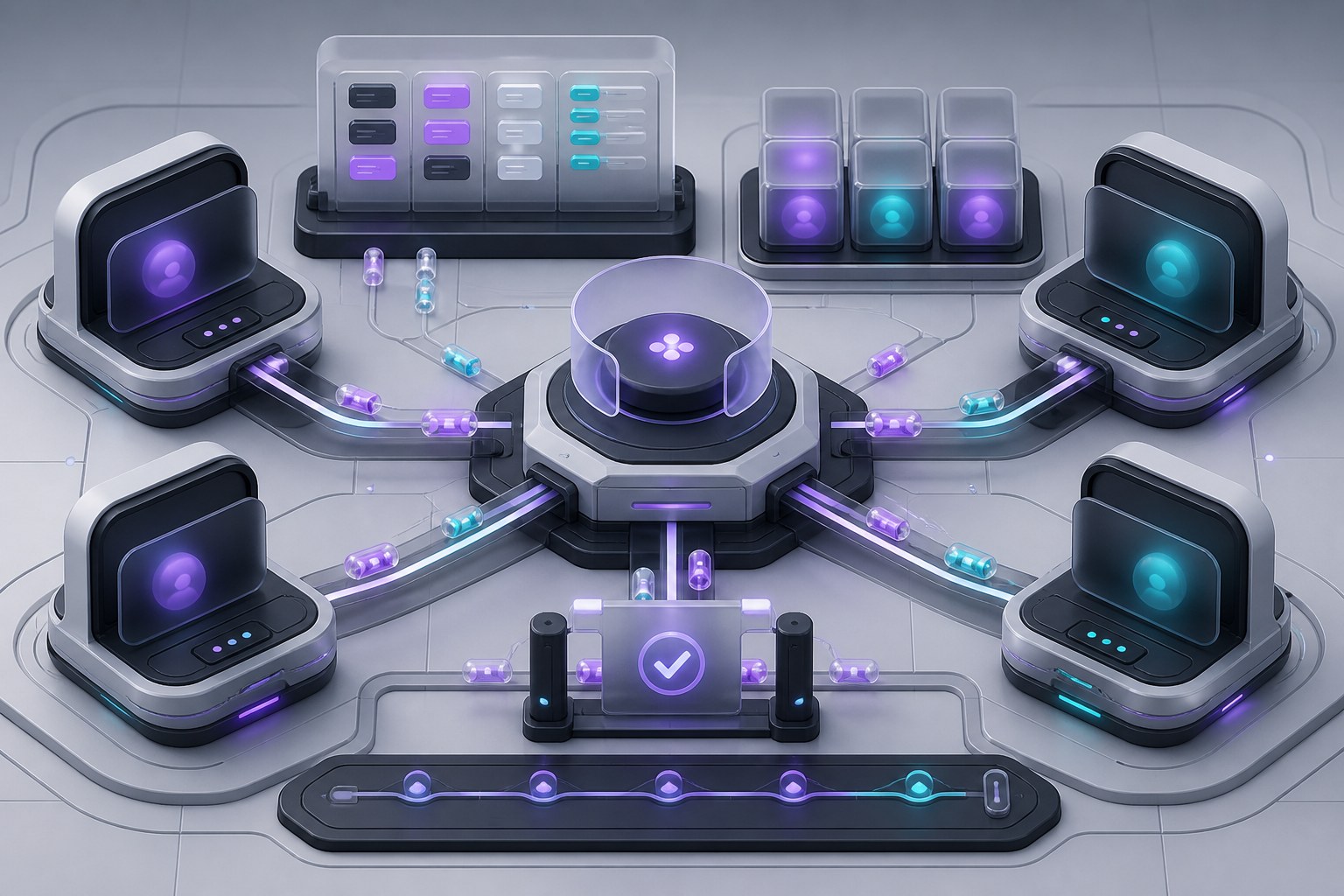
Munder Difflin wraps terminal agent CLIs in a desktop workspace with long-term memory, mailboxes, task routing, approvals, observability, and a shared pixel-office metaphor. It connects real pseudo-terminal processes rather than simulating agent output inside a closed chat interface.
- Original project
- munder-difflin
- Created by
- Chaitanya Giri and contributors
- License
- MIT for source code; bundled Modern Interiors pixel art is separately licensed from LimeZu with required credit
- Source review
- August 22, 2026
02 / Challenge
The engineering problem.
Running several coding agents introduces coordination problems: isolated context, overlapping files, unbounded loops, invisible cost, and no clear place for human approval.
This project turns those concerns into product primitives—a supervisor, message routing, durable memory, optional worktrees, budgets, circuit breakers, and a command center.
03 / System design
How the architecture responds.
Electron hosts a React and TypeScript interface. node-pty runs each provider CLI as a real terminal process rendered through xterm.js, while Pixi.js visualizes agent state. A file-based hive carries mailboxes, memory, a blackboard, and an append-only log. The orchestrator assigns work and escalates spending, destructive actions, and scope changes to human review.
- 01
Launch one or more terminal agents
- 02
Assign work through the supervisor
- 03
Route messages and memory through the shared hive
- 04
Observe terminals, tasks, cost, and events
- 05
Approve, steer, constrain, or stop when required
04 / Technology
The implementation stack.
A concise, repository-backed view of the primary platforms, protocols, models, and runtime tools.
- Electron
- React
- TypeScript
- Pixi.js
- xterm.js
- node-pty
- Monaco
- Git worktrees
- OpenTelemetry
05 / Highlights
What makes the system notable.
- Real PTY-backed agent sessions
- File-based mailbox and memory coordination
- Human gates and circuit-breaker controls
- Optional worktree isolation
- Live operational and cost visibility
06 / Repository evidence
Verifiable signals.
These statements are derived from the project’s current README, source structure, or license—not from NexLoomix client work.
- The current project documents support for twelve terminal-agent engines plus custom commands.
- The hive uses per-agent memory, atomic-file mailboxes, a shared blackboard, and an append-only event log.
- Current builds are documented for macOS, Windows, and Linux.
07 / NexLoomix perspective
The transferable product lesson.
The strongest transferable idea is operational visibility. Multi-agent systems need explicit state, routing, budgets, interruption, and approvals—not only clever prompts.
This interpretation is editorial analysis by NexLoomix. It is intentionally separated from the verified repository evidence above.
08 / Source & attribution
Credit where it belongs.
No repository pixel art or screenshots are used here. Munder Difflin is an independent parody project and is not affiliated with NexLoomix, NBC, The Office, or Dunder Mifflin.
- Repository
- munder-difflin on GitHub
- Author / organization
- Chaitanya Giri and contributors
- License summary
- MIT for source code; bundled Modern Interiors pixel art is separately licensed from LimeZu with required credit · review license
- NexLoomix relationship
- Independent editorial showcase; no authorship, client relationship, partnership, or endorsement claimed.
09 / Related NexLoomix services
Build a system around the lesson.
These capabilities connect the reference architecture to a new product shaped around your own users, data, constraints, and ownership.
From reference to product
Build an intelligent system around your business.
Bring us the workflow, constraint, or opportunity. We’ll help shape the right product and architecture.