
Local Voice Intelligence Studio
A local-first desktop platform for voice creation, transcription, and dubbing.
Original project: VoiceStudio · debpalash
01 / Overview
The system at a glance.
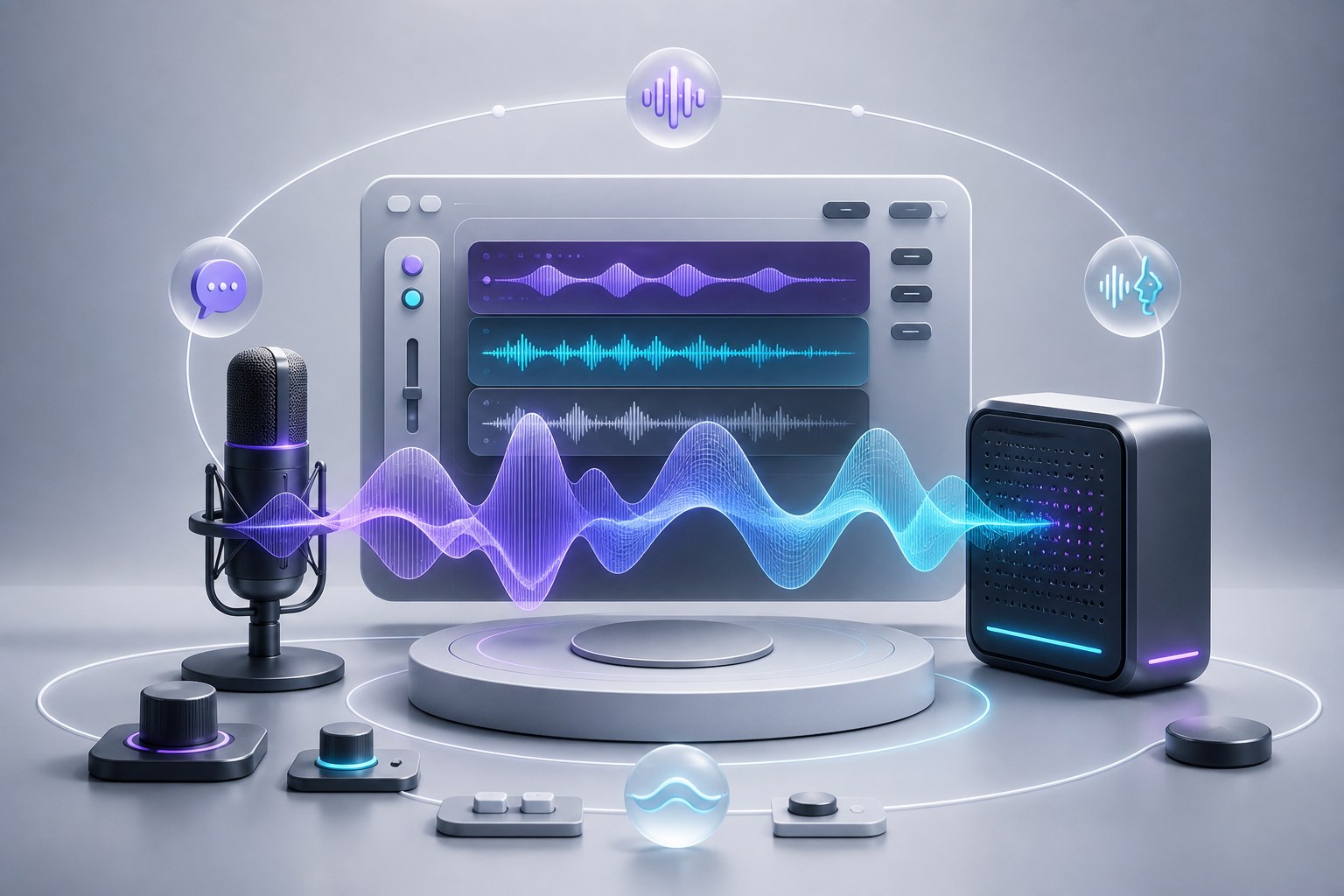
VoiceStudio brings a broad speech workflow into one desktop product: text-to-speech, speech-to-text, voice cloning, dubbing, dictation, and long-form audio production. Its architecture is especially relevant to teams exploring privacy-conscious AI media systems with optional local or remote compute.
- Original project
- VoiceStudio
- Created by
- debpalash
- License
- AGPL-3.0; optional engines and downloaded models retain separate licenses
- Source review
- August 22, 2026
02 / Challenge
The engineering problem.
Advanced speech workflows usually arrive as disconnected models, command-line tools, and hardware-specific setup. A usable product has to coordinate engines, jobs, media processing, storage, and safety boundaries without hiding when content leaves the device.
The repository addresses that orchestration problem with a desktop shell, a web-based interface, a local API, model registries, and explicit network boundaries.
03 / System design
How the architecture responds.
A Tauri desktop shell hosts a React interface that communicates with a loopback FastAPI service. The service routes work through text-to-speech and speech-to-text registries, long-form audio pipelines, local storage, and optional remote workers. SQLite and Alembic maintain product state, while HTTP, server-sent events, and WebSockets support responsive job feedback.
- 01
Import text, audio, or video
- 02
Select a speech or transcription engine
- 03
Run local generation and media processing
- 04
Review, edit, and export the result
04 / Technology
The implementation stack.
A concise, repository-backed view of the primary platforms, protocols, models, and runtime tools.
- Tauri v2
- Rust
- React
- Vite
- FastAPI
- Python
- SQLite
- WhisperX
- FFmpeg
- Sherpa-ONNX
05 / Highlights
What makes the system notable.
- Local-first desktop and API architecture
- Pluggable TTS and ASR engine registries
- Dubbing and long-form production pipelines
- Explicit disclosure for opt-in remote processing
- Cross-platform compute paths including CUDA, Apple Silicon, and CPU
06 / Repository evidence
Verifiable signals.
These statements are derived from the project’s current README, source structure, or license—not from NexLoomix client work.
- 16 text-to-speech engines and 11 speech-to-text engines are documented in the current repository.
- The language catalogue covers 646 language entries, with actual support varying by selected engine.
- The loopback service runs on localhost and remote access requires an explicit share PIN or API key.
07 / NexLoomix perspective
The transferable product lesson.
This is a strong reference for modular AI media products: isolate heavy model adapters behind stable registries, make compute location visible, and give long-running jobs a clear product surface.
This interpretation is editorial analysis by NexLoomix. It is intentionally separated from the verified repository evidence above.
08 / Source & attribution
Credit where it belongs.
All product and architecture statements are paraphrased from the public repository documentation reviewed on August 22, 2026.
- Repository
- VoiceStudio on GitHub
- Author / organization
- debpalash
- License summary
- AGPL-3.0; optional engines and downloaded models retain separate licenses · review license
- NexLoomix relationship
- Independent editorial showcase; no authorship, client relationship, partnership, or endorsement claimed.
09 / Related NexLoomix services
Build a system around the lesson.
These capabilities connect the reference architecture to a new product shaped around your own users, data, constraints, and ownership.
From reference to product
Build an intelligent system around your business.
Bring us the workflow, constraint, or opportunity. We’ll help shape the right product and architecture.