
AI Motion Capture & Retargeting
A numerical video-to-animation pipeline for retargeting motion onto Mixamo rigs.
Original project: mixamo-llm-mocap · squall01337 and contributors
01 / Overview
The system at a glance.
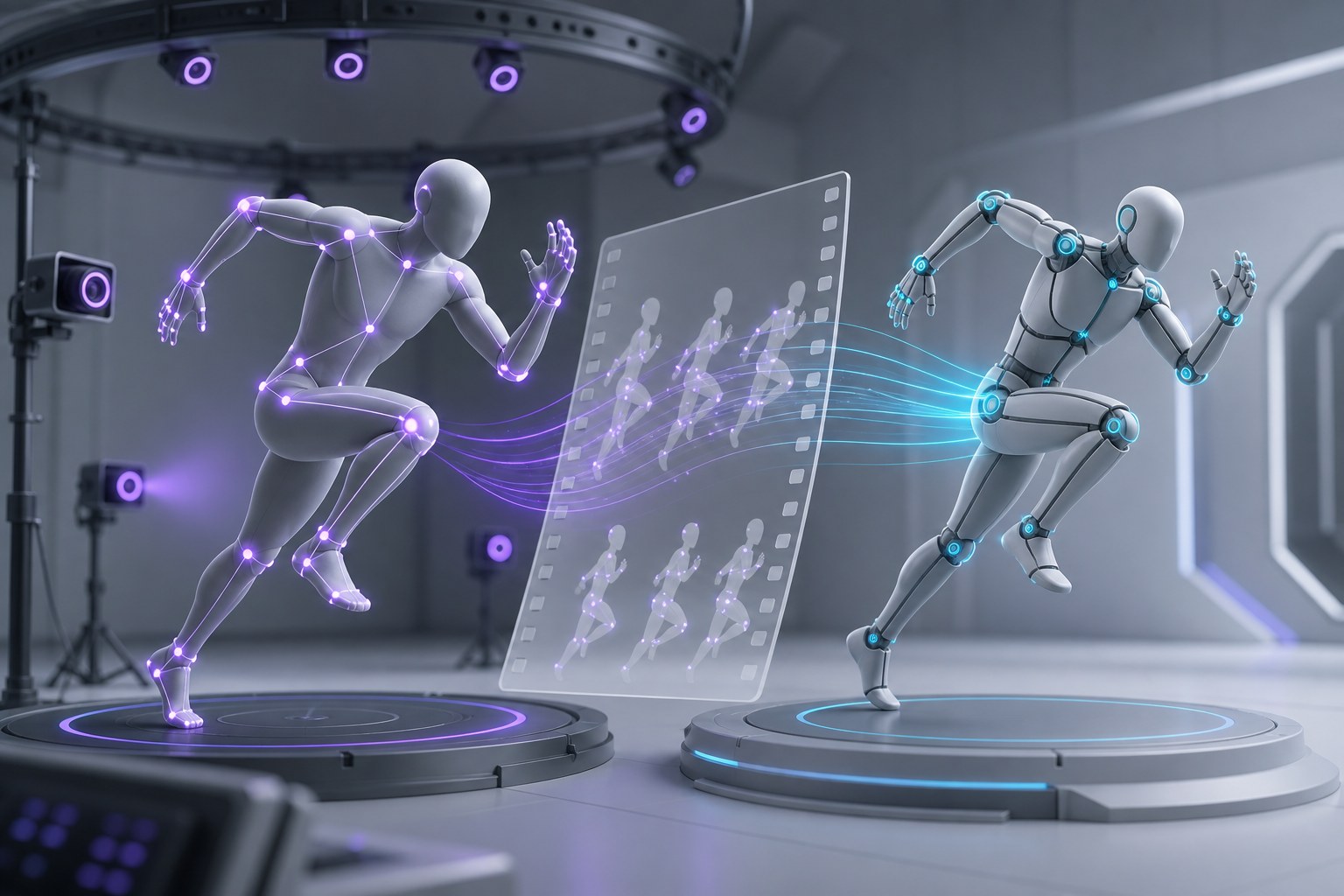
Mixamo LLM Mocap converts locked-camera video into forward-kinematics animation for Mixamo-style characters. It combines human mesh recovery, landmark analysis, declarative action specifications, proportion-aware retargeting, Blender automation, and quantitative quality gates.
- Original project
- mixamo-llm-mocap
- Created by
- squall01337 and contributors
- License
- MIT for repository code and original clips; Mixamo, GVHMR, SMPL-X, and Blender MCP have separate terms
- Source review
- August 22, 2026
02 / Challenge
The engineering problem.
Motion captured from ordinary video must survive changes in body proportions, limited camera evidence, foot contact, and two-performer interaction before it becomes useful character animation.
The project makes those ambiguities explicit: measured landmarks supply observable motion while a compact action specification records support schedules and other facts the video cannot reliably infer.
03 / System design
How the architecture responds.
GVHMR estimates SMPL-X motion and landmarks. Analysis scripts turn the sequence into numerical beats, which are paired with a JSON action specification. Retargeting rebuilds positions against the selected rig profile; Blender receives FK rotations and foot-planting data through an automated socket workflow. Dedicated QA and comparison stages flag explosions, pops, skate, drift, and mismatched frame windows.
- 01
Capture a locked-camera plate with T-pose bookends
- 02
Estimate pose and analyze landmark beats
- 03
Describe support and action intent in JSON
- 04
Retarget against measured rig proportions
- 05
Apply FK animation inside Blender
- 06
Run numeric QA and reference comparison
04 / Technology
The implementation stack.
A concise, repository-backed view of the primary platforms, protocols, models, and runtime tools.
- Python
- GVHMR
- SMPL-X
- Blender
- Blender MCP
- NumPy
- JSON
- FFmpeg
- Forward kinematics
05 / Highlights
What makes the system notable.
- Rig-profile-aware retargeting
- 30 fps quaternion-based FK output
- Foot planting without converting the rig to IK
- Closed numerical refinement loop
- Two-performer separation and collision checks
06 / Repository evidence
Verifiable signals.
These statements are derived from the project’s current README, source structure, or license—not from NexLoomix client work.
- The documented pipeline contains ten stages from pose estimation through preview rendering.
- Quality checks cover exploded bones, hip pops, foot skate, root drift, and rest-pose integrity.
- The repository includes separate comparisons for two-character spacing, strike reach, intrusion, and mesh collision.
07 / NexLoomix perspective
The transferable product lesson.
This showcase demonstrates a valuable pattern for vision systems: pair learned estimation with deterministic transforms, explicit human-authored constraints, and objective failure gates.
This interpretation is editorial analysis by NexLoomix. It is intentionally separated from the verified repository evidence above.
08 / Source & attribution
Credit where it belongs.
No Mixamo character files or upstream model assets are reproduced on this website.
- Repository
- mixamo-llm-mocap on GitHub
- Author / organization
- squall01337 and contributors
- License summary
- MIT for repository code and original clips; Mixamo, GVHMR, SMPL-X, and Blender MCP have separate terms · review license
- NexLoomix relationship
- Independent editorial showcase; no authorship, client relationship, partnership, or endorsement claimed.
09 / Related NexLoomix services
Build a system around the lesson.
These capabilities connect the reference architecture to a new product shaped around your own users, data, constraints, and ownership.
From reference to product
Build an intelligent system around your business.
Bring us the workflow, constraint, or opportunity. We’ll help shape the right product and architecture.